

The real estate industry moves fast and is extremely dependent on speed, time, and prospect relationships. In an industry driven by these factors, missing out on a single lead and follow-up can cause obstacles in the business. This makes the need for a CRM in the real estate industry even more critical.
However, just implementing a plain all in one real estate CRM is not enough and the key to deal closures and success is highly dependent on the use.
This article aims to help such falling real estate businesses and sheds light on the 8 most common mistakes the organisations make. These mistakes can cause severe business damage and if not prevented and cured at the early stage, it will lead to poor relations and losses.
1. Poor Lead Management
The most common issue in the real estate industry is the leads. The businesses list their properties on multiple websites and the spreadsheet reliant firms often struggle with tab switching to capture a lead, respond to them in that particular portal (email, website, social media, messages, etc.), add details in the CRM, and then keep track.
This process is not only time consuming, but is problematic on various levels. Traditional CRM systems often follow a spreadsheet database which has limited transparency and details. This more often than not leads to missed follow-ups, irrelevant information, and outdated databases.
How a Real Estate CRM Software Fixes the Issue?
Centralised Enquiry Handling: To curb this problem of multiple leads and forgotten clients, the CRM in the real estate industry gives the perfect fix. It creates a centralized database of all the leads by auto capturing each one from across the listed portals. Be it message, social media, or a reputed portal.
Additionally, when the leads are added in the CRM, they are auto assigned to the right agent based on their past interactions, skills, and expertise. The AI tools carefully analyse each bit of the information shared by the prospect for best results.
2. Lack of Customer Data Organisation
The customer data often lies in scattered sources like notebooks, spreadsheets, email threads, or online notes. This fragmented data makes it really hard for the agents to keep track of the customer preferences, budget, buying intent, past interaction history, and behaviour.
The Realtor CRM Fix
Unified Customer Profiles: The presence of a well structured real estate broker CRM simplifies this issue by creating unified customer profiles. This system combines all the available customer information including their past interactions, buying behavior and intent, budget and location references in a single source.
This means that every agent including higher management has complete access to the customer profile and not only agents are able to make context aware conversations, they also deal with real-time information at all times. This makes the client conversations more personal and interactive.
3. Inability to Prioritize Leads
With multiple leads flowing in the system every hour, the real estate agents often struggle to understand which leads are genuine and which ones require immediate attention. This lack of prioritization makes the entire process of lead handling baseless and agents are left dealing with either random leads or the cold leads who are casually looking.
How the All in One Real Estate CRM Fixes the Issue?
AI-Driven Lead Scoring: With the help of AI-driven lead scoring, each prospect is analysed carefully based on certain parameters and the leads are scored. This lead scoring is beneficial for the agents as they get a clear understanding of which customers must be dealt on priority. A feature that makes this easier is the fact that the scoring is done extensively and also includes past interactions + follow-up details.
4. Scattered KYC Processes & Documentation
In the real estate business ecosystem, documentation is the key to proper deal closures and must meet the data security guidelines so that no user data is leaked or misused. Businesses that follow manual KYC systems often struggle with delayed approval cycles and user responses are also delayed.
Solution to KYC Challenges Using an All-in-One Real Estate CRM System
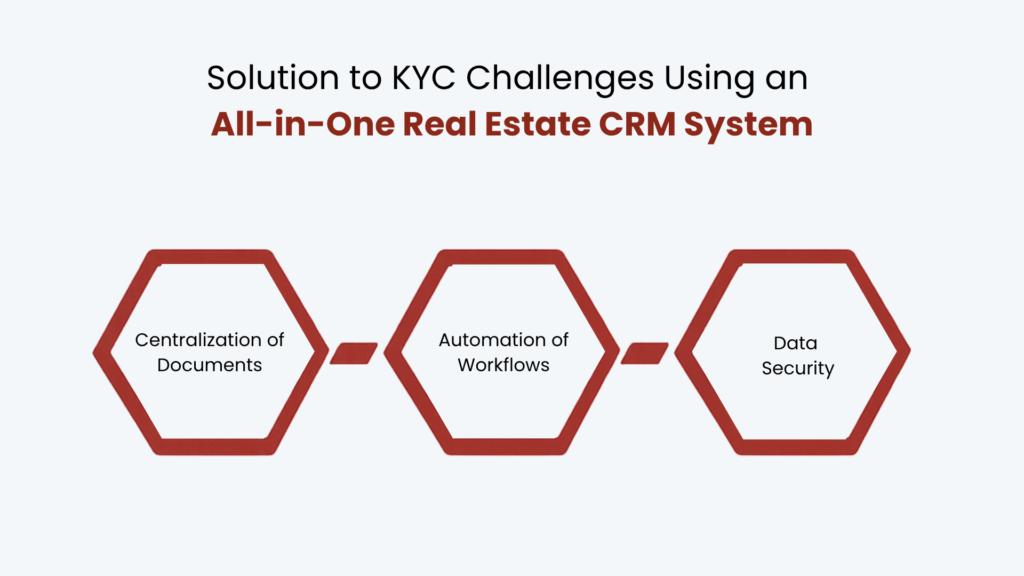
Centralization of Documents: An all-in-one CRM system will house all the KYC documents within it; hence, there will be no risk of duplications or data loss.
Automation of Workflows: Automation allows the collection and processing of all documents in an effective and structured manner.
Data Security: An all-in-one CRM system has built-in mechanisms to ensure data privacy and protection of customer data.
5. Inability to Keep Track of the Sales Pipeline Process
Due to the involvement of many properties, leads, and deals at any one particular time, it can be challenging for real estate businesses to keep a good track of the sales pipeline process.
How an All-in-One Real Estate CRM Addresses the Problem?
Visualization of Deal Status: CRM allows the visualization of every deal in a stage-by-stage manner; hence, everyone understands where each deal stands.
Updates in Real-Time: CRM updates everyone involved in real-time regarding any calls, meetings, or changes in deal status.
Insights on Deals: CRM provides performance insights, helping identify slow moving deals.
6. Marketing Inefficiencies and Campaign Management Challenges
Real estate companies usually allocate funds for several marketing mediums, yet fail to determine which of them brings valuable leads.
How a Single-Platform Real Estate CRM Solves the Problem?
Campaign Effectiveness Measurement: A CRM solution helps to trace back leads to their origin, thereby providing a way to evaluate the success of individual campaigns.
Data-Driven Marketing Strategy: Once armed with information about what marketing activities pay off, the team will be able to spend their budget wisely.
Customer Data-Based Campaigns: Using data on customers, real estate companies can develop more personalized campaigns.
Conclusion
For real estate to succeed, businesses need to be able to manage their connections, data, and time efficiently. The common problems discussed above can severely restrict business growth for real estate organizations.
CRM in the real estate industry offers an efficient solution to these problems by providing a way for organizations to store all necessary information, automate actions, and make decisions based on available data. Real estate businesses that leverage CRM technology will be better prepared to meet challenges in this competitive industry.
Every interaction in real estate has the potential to result in a sale, which makes it vital for businesses to have the appropriate tools to ensure they maximize their opportunities.
FAQs
1. What is CRM in Real Estate?
Real estate CRM refers to software that provides a single platform for real estate agents to interact with current and prospective clients.
2. What are some difficulties with managing leads in real estate?
It becomes difficult to deal with multiple sources, tab-switching, data entry, and follow-ups that may cause a lot of lost opportunities and even outdated data.
3. How does the real estate CRM help in managing leads?
The CRM system makes managing the inquiries easier by automatically managing leads received from different sources and distributing them among the agents who know best about them.
4. Why are all interactions in real estate important?
All this because each interaction can result in a sale, making it necessary to handle them accordingly through proper means such as CRM.
5. What would be the main advantage of applying CRM for property sales?
CRM aids companies in managing information, automating procedures, and making decisions based on accurate information.
For more insights, updates, and expert tips, follow us on LinkedIn.