
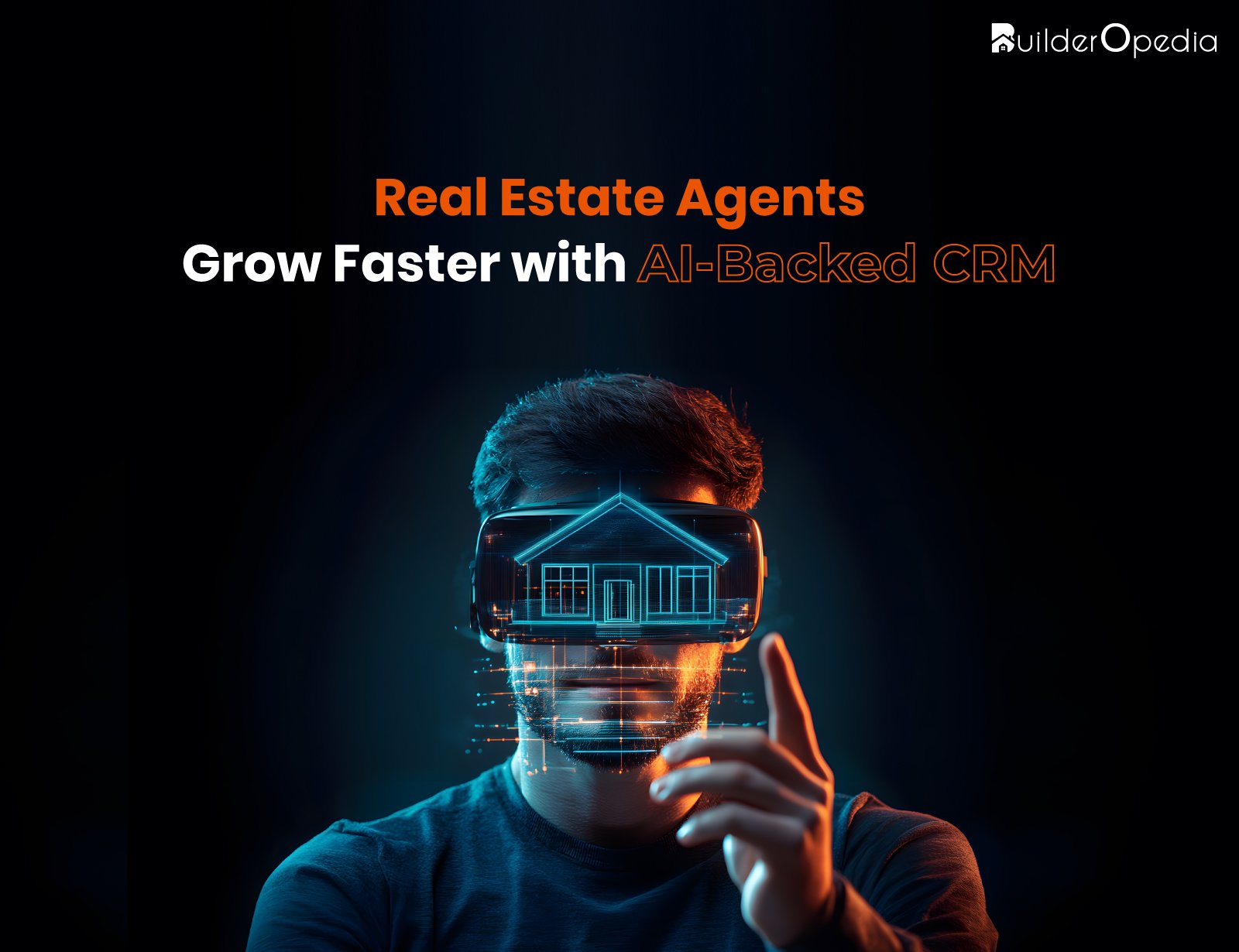
To become a successful name in real estate, the game does not revolve around listings and site visits anymore. The real winners are those who are able to provide speed and accuracy to their leads and customers while keeping on doing efforts to satisfy them.
In real estate, the investments are very high which is why buyers are very careful where they are putting their money into. They are not impressed easily and manual methods of communicating with them can kill your growth in this digitally advanced world.
Real estate agents and developers find it extremely challenging to manage leads from all their property portals, websites, social media, messaging platforms, SMS, and other sources manually. The failure to respond to leads on time or follow up on leads and prioritize them properly usually means losing deals.
However, things are changing due to AI CRMs for real estate agents. Through the proper use of intelligent processes and automation, these modern CRMs are helping real estate agents work smarter, respond quicker, and grow consistently.
How Traditional CRMs Are Digging the Grave of Your Business?
At initial stages, it might appear that traditional CRMs are adequate, but in today’s rapidly changing real estate market, they actually end up doing more harm than good.
The main motive behind designing these AI-Driven CRM For Real Estate Developers was to store information rather than help with intelligent decision-making, and as a result, they leave you behind in the game.
As the number of leads grows, traditional CRM systems begin to introduce cracks rather than resolve any issues. And as a consequence, there’s no progress and missed opportunities.
So, what are the key weaknesses of traditional CRMs? Here are they:
- They lack real-time analytics to support decision-making
- They rely heavily on manual data input
- They fail to prioritize leads
- They delay follow-ups and responses
- They offer insufficient personalization in their communication
The longer you stay with such systems, the more money you will lose in the process.
Why Does Real Estate Need AI-Driven CRM Systems?
The conventional CRM applications were designed for storing customer data and not doing anything related to smart communication. They assisted in organizing data but did not possess any intelligence that could help real estate agents make sound decisions.
In the cutthroat business of real estate, this is a problem since such a system cannot assist agents who need timely, customized information.
However, an advanced, artificial intelligence-based CRM application helps solve all these problems at once by smartly analyzing the entire data. It can provide real estate developers and agents not only with organized data but also advice about their actions, predicting the outcome based on past results.
AI for Real Estate Lead Generation and Qualification
Lead generation is easy; generating high-quality leads is another story.
All leads do not come with the intention to close the deal: many of them are just scrolling, some are there to shortlist the property, some for knowing about the prices while some can be your competitors disguised as leads.
Too many real estate agents waste their time following up on leads who aren’t yet ready to make a purchase, while highly motivated leads slip through their fingers.
AI in real estate lead generation makes it possible to target your audience in terms of behaviors, interests, and engagement. AI will assist you in determining which potential clients respond to your property listings, advertisements, and website activity.
AI lead scoring for real estate agents elevates your efforts. In place of spending precious time pursuing leads that may not make any difference, AI allows real estate agents to focus on their high-potential prospects.
Automated Lead Nurturing That Never Misses an Opportunity
A lot of real estate deals get scuttled because there was no adequate follow-up. Leads usually go stale because they were not engaged at the right time.
This is where Automated lead nurturing in real estate comes in handy. With the use of AI-powered CRMs, all leads can be continuously engaged through communications. From recommendations on properties to reminders and follow-ups, all this can be accomplished through automation without making you do anything yourself.
The main benefit of automation is not only engagement but more than that. It’s also about timing and relevance. AI-powered CRM tools trigger your communications according to the actions taken by the user, thereby ensuring that all your communications are relevant and timely.
Smarter Sales with AI Insights and Predictive Analytics
Earlier real estate decisions were based on intuition or assumptions. However, most realtors still tend to work in accordance with their assumptions regarding pricing, customer behavior, and even sales forecasts.
The use of AI CRMs eliminates all doubts and brings more transparency. Real estate agents will be able to see which deals perform best, know what buyers like, and predict further sales trends.
As for real estate developers, AI CRM software designed specifically for them will help track their projects’ performance, measure marketing efforts’ success, and improve employee productivity.
Scalability and Efficiency for Continuous Growth
The increase in the volume of real estate is associated with complexity. An excessive number of leads, deals, and customers can easily overwhelm companies if their systems are not designed for such activity.
An AI CRM system is scalable. If you manage a small company and have only a couple of leads, or manage a big corporation and have thousands of leads, the AI will not get overloaded.
Through the automation of repetitive tasks like inputting data, following up, and generating reports, the AI makes the employee’s job much easier by allowing him/her to work on valuable matters.
Competitive Advantage in a Crowded Market
Today, the real estate market is extremely competitive. The buyer has different choices, and the agent who responds quickly, effectively communicates, and knows how to meet his expectations wins.
AI-based CRM tools can do all this for you. By providing you with faster response times, better leads prioritization, and personalizing your interactions, your business will be able to stand out from the competition.
Even more, you will be able to provide your customers with a consistent customer experience – something that helps build loyalty and drives sales.
Conclusion
AI-enabled CRMs are now no longer merely an optional part of a real estate agent’s toolkit; instead, they have become essential tools for those who hope to succeed in this line of work.
The AI-backed lead scoring in real estate gives a clear picture about what are the possible intentions behind every inquiry so that efforts can be made accordingly. Given the sheer number of leads that need to be sourced, followed up on, and managed in a manner that ensures that nothing is overlooked, using AI makes the job a lot easier.
Anyone looking to grow their real estate business will eventually realize that moving to an AI-enabled CRM isn’t just a good idea, it’s an intelligent, smart, sustainable, and future-ready decision. The key is simply finding the right partner who can help you make that transition smoothly and effectively.
FAQs
1. How do traditional CRMs limit real estate business growth?
Traditional CRMs mainly store data but do not provide real-time insights or intelligent guidance. They rely heavily on manual work, lack lead prioritization, and fail to support timely and personalized communication.
2. How does AI improve real estate lead generation?
AI helps identify potential buyers based on their behavior, interests, and engagement with listings, ads, and websites. This ensures that agents focus on more relevant and high-quality leads.
3. How do AI CRMs improve decision-making for real estate agents?
AI CRMs provide insights into customer behavior, sales trends, and property performance. This helps agents make more informed decisions instead of relying on assumptions.
4. How do AI CRMs give a competitive advantage in real estate?
They enable faster responses, better lead prioritization, and more personalized communication, helping agents stand out in a highly competitive market.
For more insights, updates, and expert tips, follow us on LinkedIn.