

In a business like real estate where every inquiry is critical and can be a potential customer, the estate agents are not struggling anymore to get those. With a fully automated real estate CRM the leads are being auto captured and even auto assigned. The real struggle now lies with prioritizing these leads and understanding which leads are genuine. This problem led to the rise of an AI-based scoring model in Real Estate CRM.
This is not just a basic AI-based scoring model that prioritizes your business leads as first, second, or third priority. This AI-based model is advanced that carefully analyses each of the leads from every portal and then based on their budget preferences, past buying techniques, property preferences, and location preferences. Now based on this analysis it helps you prioritize your leads and tells you which leads are looking to buy urgently, which leads can wait, and which leads are actively looking but not chasing urgency.
In modern times and a fast evolving industry like real estate, treating each lead equally is not a feasible option and it is important to capture, nurture, follow-up, and close high potential leads as soon as possible. This AI real estate CRM saves the agents’ from running after casual leads, delayed follow-ups, and ultimately no closures.
What is an AI-based Scoring Model in Real Estate CRM?
Understanding the AI lead scoring in a real estate solution is simple. It is a simple yet an intelligent scoring system that automatically assigns a score to each of your leads based on their likelihood to convert.
This simply means that instead of manually qualifying prospects, the CRM uses artificial intelligence and data intelligence to provide an in-depth lead analysis based on their behavioral and demographic aspects like property preferences, budget range, location, website activity, email and chat engagement, response time, site visit history, past interactions, and the buying timelines.
Now based on these systems, the AI-based scoring model in real estate CRM assigns a rank to the lead like hot, warm, or cold, or scores them with dynamic number ranges like 20-40 (cold) 50-70 (warm), 80-100 (hot). This score is updated continuously based on the lead activity, and the estate reps are always working real-time, accurate, and latest data points.
How Does an AI Scoring Model Work in the Real Estate Industry?
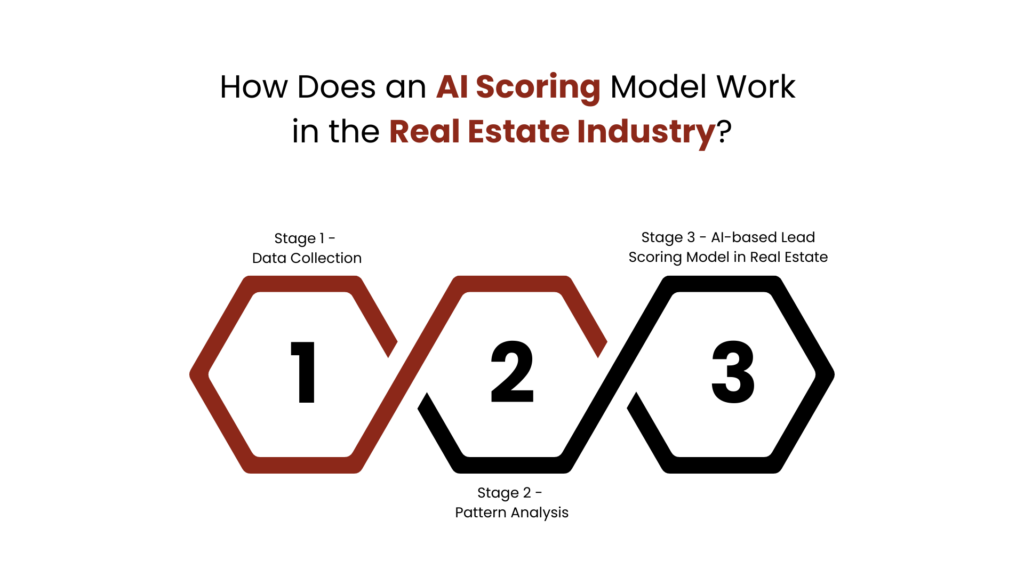
A technically advanced AI model with lead scoring abilities is the most useful thing for agents and typically works in three stages – data collection, pattern analysis, and final scoring. This allows the agents to be more focused and work on leads that truly matter.
Stage 1 – Data Collection
The first stage of this AI-based real estate CRM is to collect the data. The CRM captures and gathers lead data from multiple sources like website forms, property portals, social media ads and chats, email campaigns, WhatsApp, call logs, and even through the number of booked site visits. Every customer interaction ever becomes a data point.
Stage 2 – Pattern Analysis
The second stage is critical for scoring purposes. The AI algorithms analyse the past customer buying trends and patterns to identify successful conversion patterns. It is to be noted that the system learns from each pattern and improves its scoring data accordingly with time. Examples include:
- Leads who booked a site visit in the past 3 days are most likely to convert 80% faster.
- Buyers who viewed the pricing range multiple times have a high possibility to convert.
- Prospects responding to agent follow-ups within 24 – 48 hours are more likely to close.
Stage 3 – AI-based Lead Scoring Model in Real Estate
The final step after running a detailed analysis and identifying patterns based on historical data, the AI model scores the leads. For example – 20-40 means cold leads and not likely to convert, 50-70 indicates a warm lead with conversion chances, and 80-100 is categorised as a hot and priority lead requiring immediate attention and has the highest chance of final closure.
Why is Lead Scoring in an AI Real Estate CRM Critical?
A real estate business cannot run on guess work and it requires an AI-based scoring model in real estate CRM. With leads flowing from multiple sources, it is crucial to identify genuine and convertible leads for results.
- With the lead scoring model and AI-based prioritization the real estate agents are able to ensure transparency, faster closures, and consistency in the sales processes. This eliminates all the guesswork in the lead qualification system and agents work on data backed insights.
- In real estate, speed matters. The AI scoring models identify serious prospects early and enables priority lead assignment, initiates automated and quick follow-ups, and escalations to senior management happen faster which shorten the long approval cycles.
- Since sales teams have limited bandwidth, the automated solution to sell properties faster allows the agents to give immediate attention to high priority leads while nurturing campaigns effectively handle the cold leads. The sales close faster this way leading to improved morale and efficiency.
- AI scoring identifies buyer behavior patterns investors focus on ROI, end-users on amenities, and budget buyers on pricing. This enables sales teams to personalize conversations and property recommendations for better engagement.
- This scoring model tends to reduce lead leakage as the follow-ups are automated, priority leads are tagged and flagged instantly, and the inactive leads trigger re-engagement workflows, reducing the risk of losing valuable prospects.
- AI-based scoring models deliver actionable insights into lead quality, campaign performance, property conversion trends, and buyer engagement patterns. These analytics help management optimize marketing spend, improve targeting accuracy, and drive smarter sales decisions.
Conclusion
The real estate industry runs on speed, consistency, and strong customer relationships. By establishing a powerful real estate CRM solution, the estate agencies not only open doors to successful closures but also open the gates to valuable and data backed insights which help with decision making. The AI-based scoring model in real estate CRM has been a game changer in this scenario.
When the agents get proof of what leads are likely to convert, which leads require urgent attention, and which leads can be held back, their productivity increases and they tend to work better, faster, and smarter with real-time data. With the lead score being updated at every point, your sales reps only work with the latest data and the AI model uses past interactions and other detailed information to categorise and score leads.
It is therefore safe to say that AI powered real estate CRM backed with a strong lead scoring potential is the future of property sales and an automated solution to sell properties is no longer a choice but a one time business investment to scale and maintain the sustainable growth graph.
FAQs
1. Why is an AI-based scoring model important for real estate businesses?
An AI-based scoring model in real estate CRM is critical for real estate businesses. The industry cannot work on guesswork in lead qualification, and therefore, an AI lead scorer improves response time, reduces lead leakage, and increases conversion rates. It ensures agents focus on leads that truly matter.
2. How to use AI for lead scoring?
Real Estate CRM uses artificial intelligence and data intelligence to provide an in-depth lead analysis based on their behavioral and demographic aspects like property preferences, budget range, location, website activity, email and chat engagement, response time, site visit history, past interactions, and the buying timelines. Now based on these systems, the AI-based scoring model in real estate CRM assigns a rank to the lead like hot, warm, or cold, or scores them with dynamic number ranges.
3. How to set up AI lead scoring in a CRM?
Setting up AI lead scoring in a CRM involves data collection, pattern analysis, and final scoring. This process usually takes 8-12 hours to two weeks with an 80%+ accuracy rate with proper historical data analysis.
4. Can AI scoring models help prevent lead leakage?
Yes, AI scoring models can help prevent lead leakage. The scoring model tends to reduce lead leakage as the follow-ups are automated, priority leads are tagged and flagged instantly, and the inactive leads trigger re-engagement workflows, reducing the risk of losing valuable prospects.
5. Is AI scoring suitable for small real estate agencies?
Absolutely. Whether it’s a small real estate agency or a large real estate developer, an AI scoring solution for real estate CRM can help maximize marketing ROI, enhance targeting precision, and drive more closings.
For more insights, updates, and expert tips, follow us on LinkedIn.